Viking Refrigerator Repair
Viking Refrigerator Warm While the Freezer Stays Cold
Written by
Owen Castellanos
Service technician — doors, hinges and cabinet work · 12 years in the trade
When the fridge side of a built-in Viking creeps into the fifties and the freezer is still rock solid, the problem is nearly always air movement rather than refrigerant. What that split means and what to check before booking.
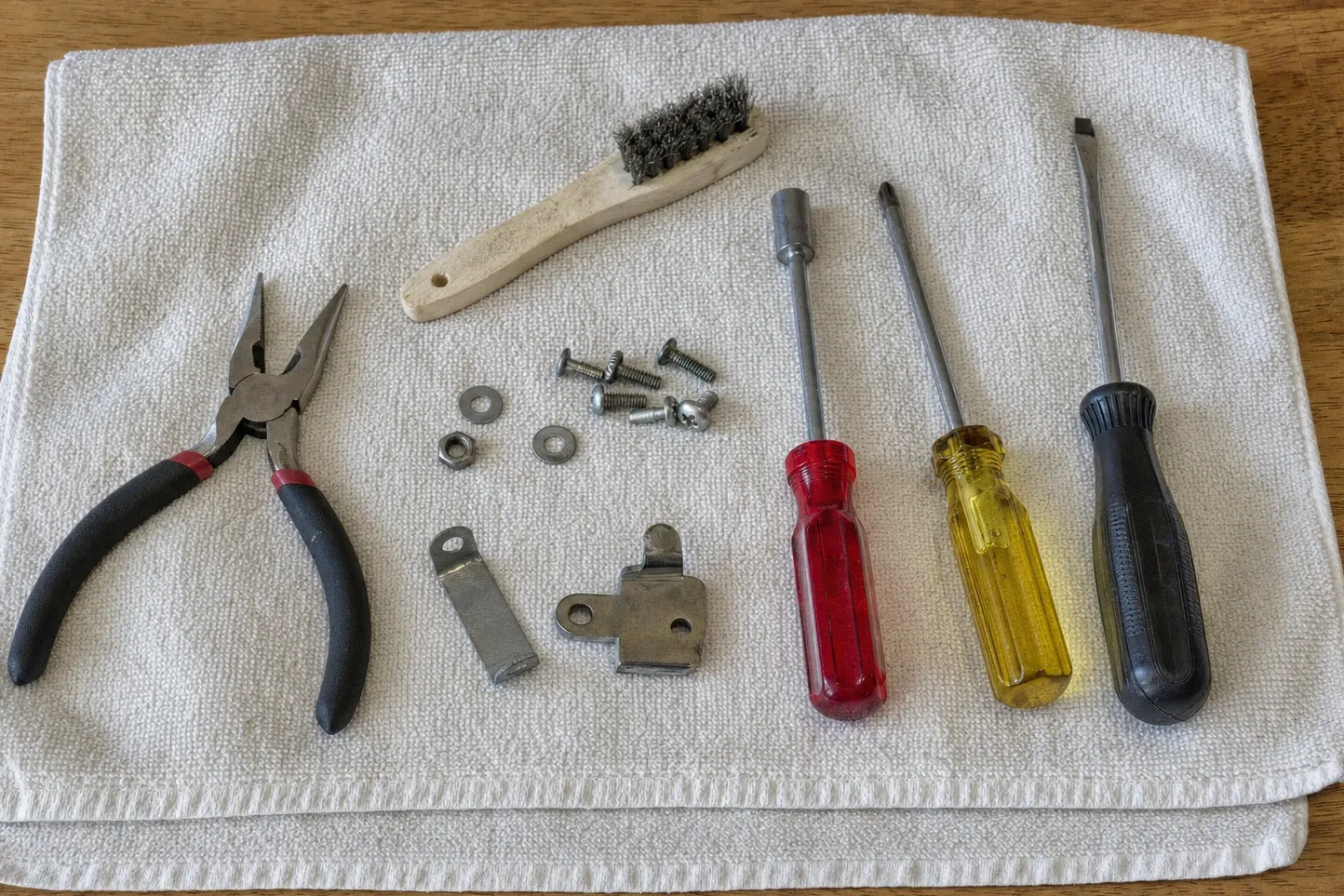
It is the single most common refrigeration call this business takes, and the one where the most money gets wasted on the wrong answer. The fresh-food side of a built-in has drifted into the low fifties. Milk is turning early. Meanwhile the freezer below or beside it is still hard enough to hurt your fingers. Somebody has already said the word compressor.
Almost always, that particular split is telling you something much cheaper.
What the split is telling you
On a built-in Viking with a single evaporator, both compartments are cooled by the same coil. Cold air is produced in one place and then distributed — pushed through ducts by an evaporator fan, and metered into the fresh-food compartment through a damper. The freezer sits closest to the source. The fridge is at the end of the delivery.
So when one compartment is cold and the other is not, you are looking at a distribution problem rather than a production problem. The machine is still making cold; it is failing to move it. That single deduction rules out the two most expensive repairs on the board before anyone has taken a panel off, which is why we meter first and quote second rather than the other way round.
The opposite pattern matters just as much. If both compartments are drifting warm together and the compressor is running continuously and the room around the unit is noticeably warm, that is production, and that is a sealed-system conversation.
The four faults that cause it
Ranked by how often each one is the actual culprit, commonest first:
A stopped evaporator fan. The fan lives behind the rear panel of the freezer. Bearings dry out, a blade catches on ice, or the motor simply gives up. With no fan there is no delivery, so the freezer coasts on cold soak while the fridge starves. Open the freezer, hold the door switch in, and listen: on a healthy unit you can hear the fan settle and pick up. Silence is diagnostic.
A defrost fault icing the coil. The coil frosts as it works and is meant to be cleared several times a day by a heater under thermostatic control. When the heater opens, the bimetal fails or the control stops calling for defrost, the coil turns into a block of ice that air cannot pass through. Symptom order matters here: it gets worse over days, often improves briefly if the unit is switched off overnight, then returns. That pattern is close to conclusive.
A damper stuck shut. The air door between the compartments is either mechanically stuck or its control has lost the plot. It is the cheapest of the four and the easiest to prove, and on a dual-zone wine cabinet the equivalent fault is a sensor that has fallen out of its bracket and is reading the wrong air.
Airflow blocked, by us or by the joinery. A condenser matted with dust at the base, a grille that was never refitted, a shroud left off after earlier work, or cabinetry that boxed the unit in with no return path. This one is common in loft conversions and in remodels where a run of joinery was built tight around a column, and it is the one where nothing is broken at all.
What it is almost never
- Low refrigerant. A sealed system does not leak a little and carry on cooling half of itself. A real leak takes both compartments with it.
- The thermostat, on anything modern. Electronic control has taken over that job, and the sensors that feed it are cheap.
- The control board, first. Boards do fail. They are also the single most frequently replaced part that did not need replacing, because swapping one is faster than proving a fan motor with a meter.
- The door, on its own. A tired gasket or a cabinet gone out of level raises both compartments a little and produces condensation and frost near the seal. It will not put the fridge in the fifties while the freezer holds zero.
What to check tonight before you book
Half an hour of this makes the visit shorter, and occasionally makes it unnecessary:
- Stand a tumbler on the middle shelf, fill it with water, drop a thermometer in and leave it until morning. Display readings and door-mounted probes both lie; a mass of water does not.
- Empty the freezer far enough to see the back panel. Any frost visible around the edges of it, or ice creeping out at the bottom, points straight at defrost.
- Close the fridge door on a strip of paper at three heights and see whether it grips evenly. A corner that stands off is worth mentioning on the phone.
- Pull the base grille and look at the condenser. If it is furred with dust and pet hair, that is worth clearing regardless of what else is wrong.
- Listen for the evaporator fan with the door switch held in, and note whether the unit is running constantly or cycling normally.
- Write down when it started and what changed — a remodel, new joinery, a power cut, a house move, or somebody else’s earlier repair.
When to stop and call
Stop if the fresh-food compartment is above 45°F and not recovering, if there is standing water under the crisper drawers, if you can see ice built up on the rear freezer panel, or if the machine has begun running without ever cycling off. Those four all lead somewhere specific, and none of them improve with waiting.
Bring the model plate details with you to the phone — inside the door frame on most built-ins, and on the upper left of the fresh-food opening on columns. A fan motor, a defrost heater and a damper assembly are all model-specific, and knowing which revision the unit takes is the difference between one visit and two. The visit itself is $89, credited in full against an approved repair, and this fault is usually settled inside the first half hour: a temperature log, a look behind the rear panel, and a meter across the fan.
Follow-ups
How long should I give it before calling?
If the fresh-food side is above 45°F for more than about four hours and falling no further, the food load is at risk and it is worth a call. A unit recovering slowly after a door was left open, or after a heavy shop went in, deserves overnight before anybody panics.
Should I empty the freezer and defrost it manually?
It is a reasonable holding action and it tells you something: if the fridge side recovers for a day or two after a manual defrost and then drifts warm again, the defrost circuit is the fault. It does not fix anything permanently, and a hair dryer aimed at a plastic liner does real damage.
Does a warm fridge mean the compressor is failing?
Rarely, and it is the most expensive place to guess. A failing compressor or a refrigerant fault normally shows up as both compartments losing ground together, with the machine running constantly. One compartment cold and one warm points at air, not at the sealed system.